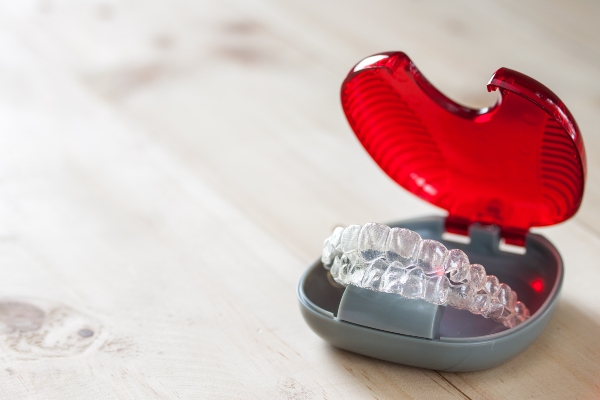
 Invisalign® treatment demands wearing the aligners for at least 22 hours a day. Read on to learn more about what it is like to sleep while wearing Invisalign aligners. The only time you should take your Invisalign aligners out of your mouth is to eat, drink anything other than water, and brush your teeth. That implies that you need to wear the Invisalign trays at night while sleeping to achieve correct tooth alignment. It may feel strange sleeping with a foreign object in your mouth at first, but it will soon become second nature, and you will fall asleep as effortlessly as you did before the teeth straightening treatment started.
Adjusting to Invisalign aligners during sleep
Invisalign aligners are made from clear thermoplastic that is almost invisible to the naked eye. They operate by applying pressure to teeth, causing the bone supporting the teeth to react and recede in the correct direction. Bone fills in from the opposite side when the tooth shifts position. This causes the teeth to realign over time.
The mouth may stay slightly ajar while sleeping during the first few nights as the patient acclimates to the aligners, and there could be an increase in nocturnal salivation and drooling. The orthodontist will recommend sleeping with the head raised and looking upward to reduce this. It helps to keep a glass of water nearby to counteract any dry mouth due to leaving the mouth open.
Looking at the big picture, the increased nocturnal drooling and early pain are minor annoyances, and the beautiful smile that is attainable with Invisalign will make it worth it eventually. Wearing the Invisalign aligners at night will not only ensure proper teeth straightening but will also act as a barrier between teeth, shielding them from the damaging effects of nocturnal grinding. In comparison to metal braces, this protective aspect provides an extra advantage.
Nighttime use of Invisalign aligners
Invisalign works because of the near-constant pressure. Therefore, it is necessary to wear the aligners during sleep. The manufacturers of Invisalign suggest wearing the braces for 20 to 22 hours each day and only removing them while eating or brushing the teeth.
It is not a good idea to remove the aligner trays while sleeping. They will not function as fast if they do not provide continuous pressure. If patients stay too long without using Invisalign, the teeth may return to their original position, and they will have to restart the treatment from scratch.
If patients neglect to wear their Invisalign aligners at night for a few days, such as when on vacation, they may experience pain when putting them back on. This is a common side effect of the teeth moving out of alignment.
Within a few days, the pain should go away. If it does not, it means the teeth may have moved to the point where the Invisalign has to be adjusted. The chances are that the patient will have to go back to a previous Invisalign aligner tray until the teeth adjust again.
In summary
It is important to wear Invisalign aligners for the minimum number of hours recommended. This will ensure treatment progresses optimally.
Request an appointment or call Embrace Smile Studio Orthodontics at 818-284-4550 for an appointment in our Toluca Lake office.
Related Posts
If you are considering Invisalign® treatment for teeth straightening, you will likely want details about the process. Read on to learn about what happens during and after Invisalign treatment. When you visit the orthodontist for a consultation, they will explain the specifics of what to anticipate during and after treatment. They will also discuss using…
Invisalign® allows people to straighten their teeth without needing the metal brackets and wires with conventional braces. Invisalign trays are transparent and almost undetectable on the teeth. However, what exactly are those trays composed of? Continue reading to discover more about how the trays' material and design move your teeth around.Invisalign clear aligners, often known…
Are you considering Invisalign® treatment? Read on to learn more about this teeth-straightening treatment. If you have misaligned teeth, you can choose Invisalign to straighten your teeth. Many individuals hide their smiles because their teeth are not perfectly straight. There is no need to shy away from smiling with these teeth-straightening treatments, even in social…